-110x110.png)
New energy vehicle battery trays and large structural parts
For the drawing evaluation, sample verification and bulk purchase requirements of new energy vehicle battery trays, bottom plates, end plates, cross beams and large load-bearing structural parts, focusing on confirming the sealing interface, assembly benchmark, flatness and hole system relationship.
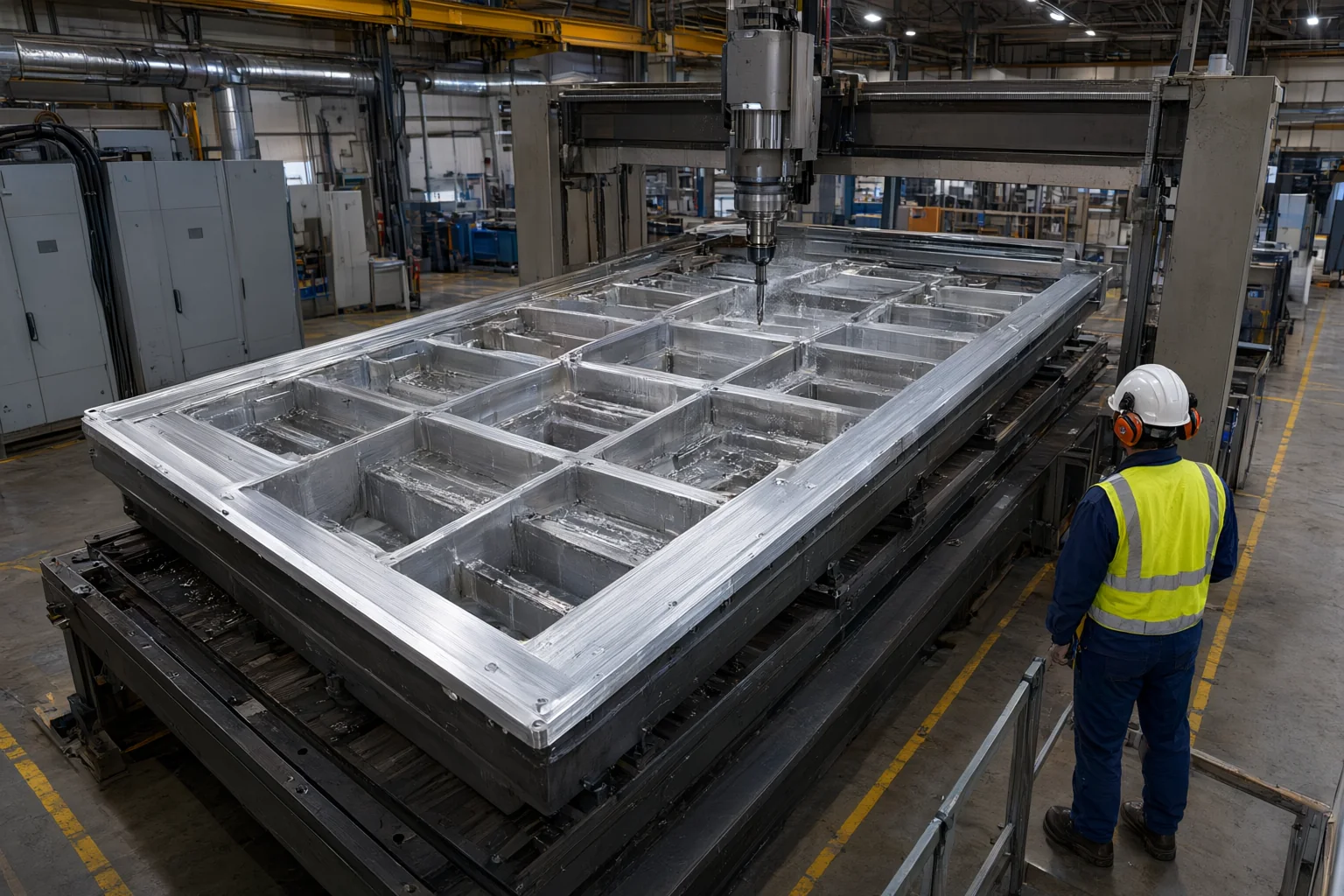
Scope of parts that can be evaluated
The following classifications are used to help purchasers quickly confirm the direction of demand; whether it can be processed is still subject to review of drawings, materials, quantities, rough status and technical requirements.
01
Large battery trays, base plates and sealing flanges
02
End plates, beams, connecting blocks and mounting blocks
03
Samples, design verification parts and small batch assemblies
Processing, testing and project delivery scenarios
The pictures are in a documentary style and are used to illustrate the processing, testing and finished product status that the purchaser may be concerned about, and are not intended to prove real customer cases.
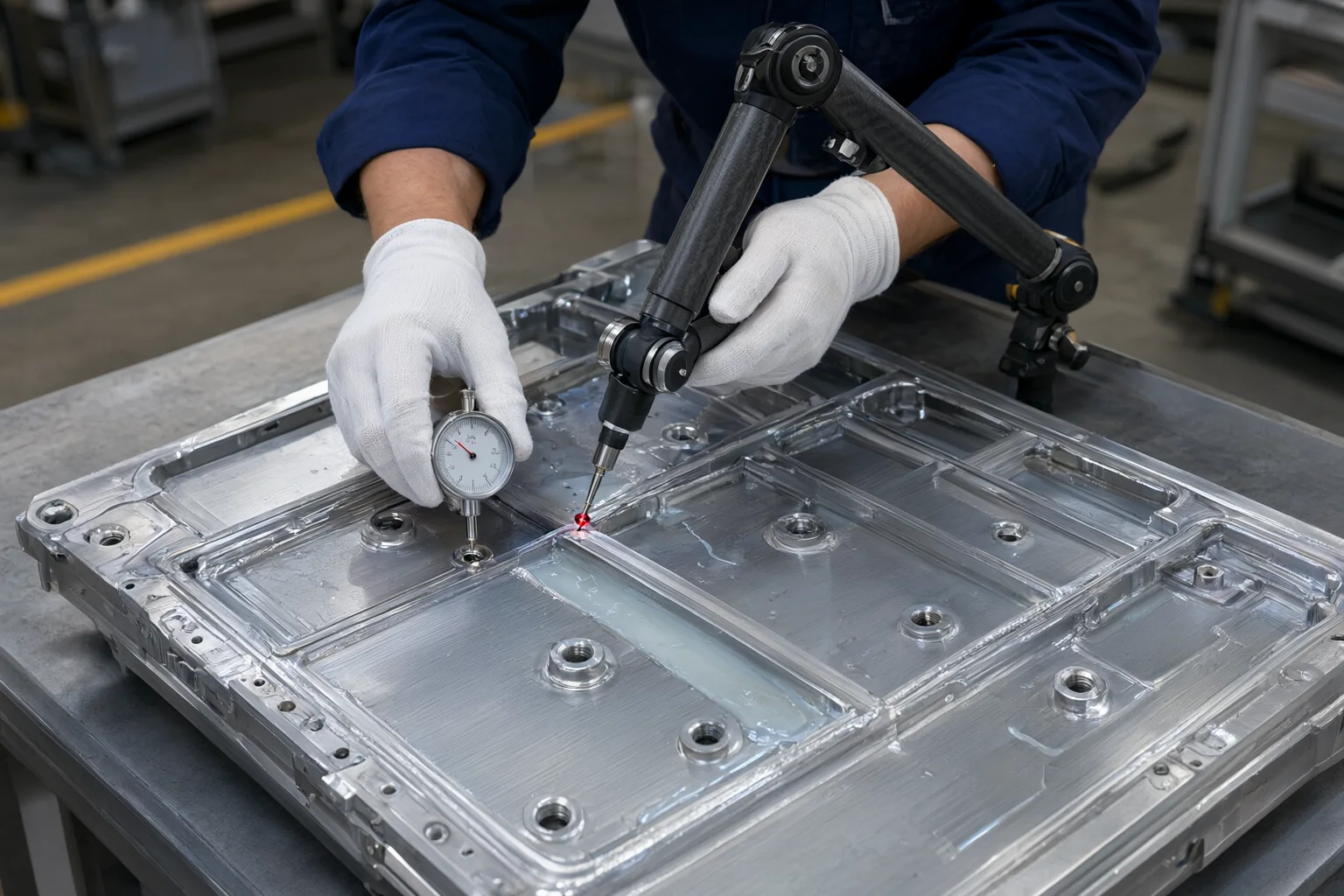
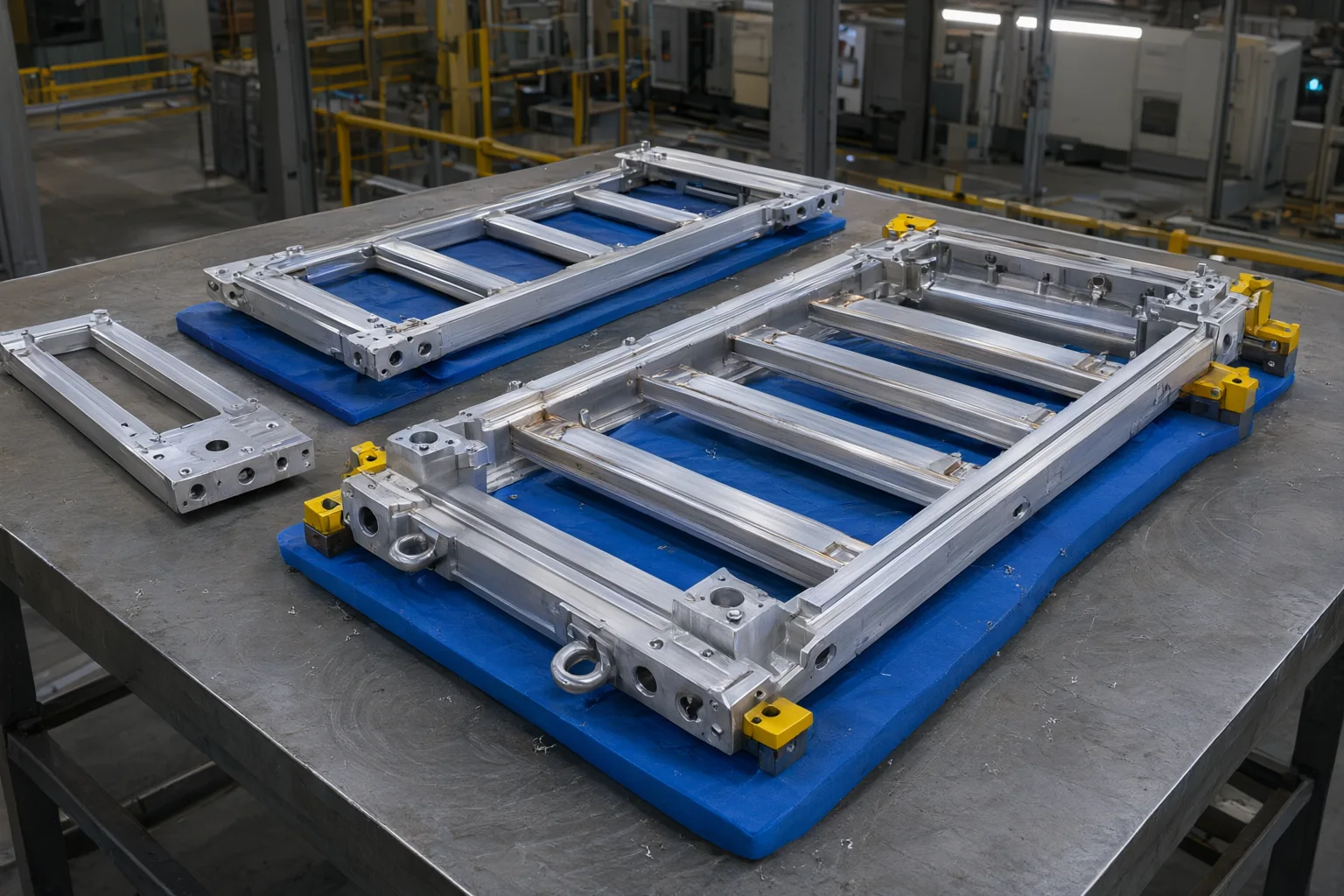
Equipment capabilities and project boundaries
Inquiries and technical reviews are required
| Drawings and versions | 2D drawings, 3D models, drawing numbers, version numbers, assembly relationships and unchangeable functional interfaces. |
|---|---|
| Materials and blanks | Material grade, status, casting/forging/plate requirements, machining allowance and whether equivalent material recommendations are allowed. |
| Key requirements | Datums, key tolerances, roughness, sealing surfaces, heat treatment, surface preparation, cleanliness and functional requirements. |
| Quantity and delivery | Sample quantity, single batch quantity, estimated annual usage, destination country, expected delivery date, packaging and trade terms. |
| quality document | Material documentation, dimensional reports, traceability requirements, and scope of PPAP, control plans, MSA or other automotive project documents. |
Procurement FAQ
Can large battery trays be quoted directly based on equipment size?
cannot. It is also necessary to check the Z-direction height, blank weight, clamping space, sealing surface, welding deformation and detection method.
Can I make a single sample first?
Single prototypes, design verification and small batch assembly verification can be evaluated, and the final drawings and material status shall prevail.
Is the equipment deviation shown on the page equal to the part tolerance?
Not equal to. The repeated positioning deviation of the equipment is only used for preliminary capability description. The final tolerance of the parts must be confirmed in combination with the drawings, materials, span, clamping, temperature, processing process and inspection methods.
Start evaluation with drawings and project boundaries
Please submit drawings, materials, quantities, critical tolerances, quality document requirements, destination country and expected delivery date.
Submit requirements for new energy vehicle battery trays and large structural parts
支持PDF或ZIP,单个文件不超过10 MB。DWG、DXF、STEP、STP、IGES等文件请先压缩为ZIP。资料仅用于项目评估。提交图纸进行工程评估
